
Driveway Cobblestone Apron – Curb Appeal with Timeless Style
Are you considering adding more charm and durability to your driveway entrance? Then you may want to consider a driveway cobblestone apron.
But what exactly is a driveway cobblestone apron?
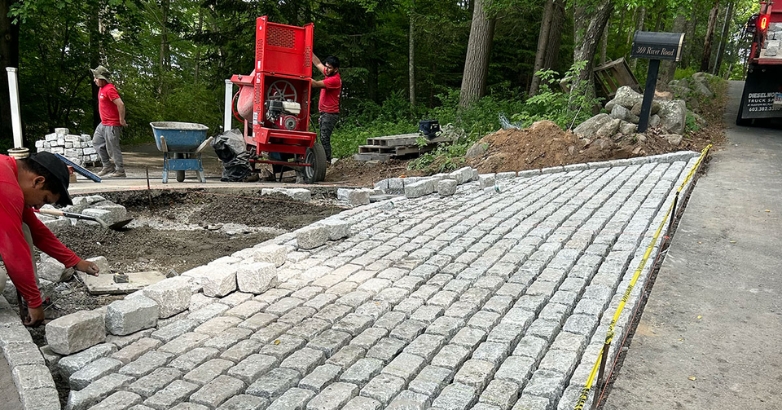
A cobblestone apron is a decorative and structural section at the beginning of your driveway, typically made from natural stones like granite, Belgian blocks, or reclaimed cobblestones. It serves as a sturdy transition between the street and your driveway, protecting the edges from wear and creating a polished, upscale look that instantly boosts curb appeal.
Here’s a list of the key topics and considerations covered in the article:
- Types of Cobblestone Used for Aprons
- Key Benefits of Cobblestone Aprons
- Design Options for Cobblestone Driveway Aprons
- Installation Process of Driveway Cobblestone Apron
- Driveway Cobblestone Apron Cost Breakdown
- Driveway Cobblestone Apron Maintenance & Longevity
- Frequently Asked Questions
- Conclusion
Ready to explore why a cobblestone driveway apron is a smart investment. and how to design one that fits your home perfectly? Read on to discover materials, patterns, installation tips, cost insights, and inspiration for your property entrance.
Types of Cobblestone Used for Aprons
Choosing the right material for your driveway cobblestone apron is essential for lasting beauty and performance. Here are the most popular cobblestone options, each offering unique benefits and styles to complement your home or commercial property.
Granite Cobblestones
Granite cobblestones are known for their unmatched durability and natural beauty, making them a top choice for cobblestone driveway aprons. With their dense composition and resistance to cracking, granite stones can handle heavy traffic and harsh weather.
Their rich, earthy colors and textured surface provide a timeless look that enhances any driveway entrance, offering both visual appeal and a surface built to last for generations.
Belgian Blocks (Setts)
Masons and urban planners have long used Belgian blocks—also known as setts—to pave European streets. They value these rectangular stones for their uniformity and elegant appearance, which makes them ideal for apron driveway cobblestone installations.
Belgian blocks come in various sizes and shades, which allows for greater design flexibility. Moreover, their robust nature ensures excellent load-bearing capability. As a result, they create a refined, sophisticated entryway that elevates the overall look of your property.
Reclaimed Cobblestones
Salvage crews reclaim cobblestones from historic streets and buildings, adding one-of-a-kind character to your driveway cobblestone apron.
These stones offer authentic charm, featuring weathered surfaces and unique shapes that tell a story.
Opting for reclaimed cobblestones is not only an eco-friendly choice but also a way to preserve history while ensuring exceptional strength and resilience. In addition, their classic appeal adds personality and value to your driveway entrance, making a lasting impression from the moment guests arrive.
Concrete Pavers
Concrete pavers are a versatile and cost-effective option for creating a cobblestone driveway apron with modern performance. These pavers are engineered to mimic the look of natural stone, available in various shapes, sizes, and colors.
Concrete pavers are easy to install and maintain, offering a durable surface that resists cracking and fading. They offer versatile design options and reliable performance for homeowners who want a balance of style and functionality.
Key Benefits of Cobblestone Aprons
Installing a driveway cobblestone apron offers more than just a beautiful entryway. Here are the key benefits, from durability and style to low maintenance and increased property value, making cobblestone aprons a smart investment.
Durability
This type of driveway is built for long-term durability. Thanks to the natural strength of granite, Belgian blocks, or concrete pavers, it can easily endure heavy vehicle loads, temperature fluctuations, and everyday wear without cracking.
With expert installation, your apron driveway cobblestone will remain intact through harsh Connecticut winters and summer heat, giving you peace of mind that your investment is truly built to last.
Aesthetics
The classic look of a driveway cobblestone apron adds immediate curb appeal to any property. Each stone brings unique character, whether you choose the uniform elegance of Belgian blocks or the rustic charm of reclaimed cobblestones. You can customize your apron with a variety of patterns and colors to complement your home’s architecture and landscaping, creating a sophisticated first impression for guests and neighbors alike.
Low Maintenance
One of the biggest advantages of a cobblestone driveway apron is its low maintenance requirements. Unlike asphalt or poured concrete, cobblestones rarely crack or develop potholes.
Occasional sweeping and joint replenishing are usually all that’s needed to keep your apron looking great. If a stone does shift or become damaged, individual repairs are simple and cost-effective, saving you time and effort over the years.
Read More: Best Stone for Patios in Connecticut – 5 Top Stone Options
Property Value
A professionally installed apron driveway cobblestone can significantly boost your home’s market value. Buyers are drawn to the timeless appeal and durability of cobblestone features, seeing them as a sign of quality craftsmanship and care.
Not only does a cobblestone apron make your property more attractive, but it also adds functional benefits that future homeowners will appreciate, making it a wise long-term investment.
Ready to enhance your driveway? Contact Elite Landscapes & Concrete today for a free consultation on your driveway.
Design Options for Cobblestone Driveway Aprons
Your driveway cobblestone apron can be uniquely tailored to fit your home’s style and your personal preferences. Explore these popular design patterns to find the perfect match for your property’s entrance.
Straight Layout
A straight layout arranges cobblestones in neat, parallel lines across the driveway apron. This classic, clean-lined design is a favorite for both traditional and modern homes. It creates a simple yet elegant transition from the street, emphasizing the apron driveway cobblestone’s symmetry and structure.
The straight layout works well with almost any property, providing timeless curb appeal and an organized, professional look.
Herringbone Pattern
The herringbone pattern features cobblestones set at an angle to form a zig-zag effect. This interlocking design offers both visual interest and enhanced stability, distributing weight evenly across the apron.
Herringbone is a popular choice for driveway cobblestone aprons because it blends old-world charm with durability, resisting shifting under frequent vehicle traffic and adding a distinctive, dynamic look to your entryway.
Running Bond Pattern
A running bond pattern staggers each row of cobblestones, much like traditional brickwork. This style provides a subtle, contemporary twist on classic stonework. The overlapping arrangement not only adds visual texture to your cobblestone driveway apron but also increases structural integrity, making it an excellent option for wide driveways or areas requiring extra support and durability.
Fan Pattern
The fan pattern lays cobblestones in graceful, curved arcs, creating a bold and elegant visual effect that highlights your driveway entrance. This intricate arrangement emphasizes craftsmanship and immediately enhances the overall curb appeal. Ideal for homeowners who want a distinctive, sophisticated entryway, the fan pattern sets any property apart with timeless style.
Border (Soldier Course)
A border—also known as a soldier course—adds a polished finish to your driveway cobblestone apron by introducing a line of upright or contrasting stones. Not only does this create clear visual definition and contrast, but it also helps retain the apron’s structure. Furthermore, borders are ideal for highlighting design details, offering both a refined appearance and added edge stability for your driveway entrance.
Looking for more ways to enhance your property?
Check out our guide to Outdoor Living Space Design in Connecticut for ideas and inspiration to create the perfect backyard retreat.
Installation Process of Driveway Cobblestone Apron
Building a cobblestone driveway apron demands precise planning, skilled workmanship, and attention to detail to achieve lasting durability and visual appeal. Below is a step-by-step overview of the professional installation process.
Mark and Measure the Apron Area
Successful apron installation starts with precise planning. Begin by measuring and marking the installation area using string lines and spray paint to ensure accurate layout. Careful alignment allows the cobblestone apron to fit seamlessly between the driveway and street, maintaining symmetry with existing landscaping or curb lines. Measuring early also helps you calculate material quantities, reducing waste and avoiding shortages. At this stage, finalize the desired width, depth, and any border designs to match both your aesthetic preferences and practical needs.
Excavate the Site to the Required Depth
After marking the area, contractors begin excavation by removing the topsoil and existing materials to the required depth—typically 8 to 12 inches, depending on soil conditions and the weight of expected vehicle traffic. They use excavation equipment and hand tools to create a clean, uniform depth across the entire apron footprint. Clearing out roots, debris, and soft spots ensures proper drainage and helps prevent future settling or shifting. This thorough excavation lays the groundwork for a stable, long-lasting cobblestone surface.
Read More: Stone Patio Ideas – 15 Designs to Elevate Your Yard
Install a Compacted Gravel Base
To build a lasting driveway cobblestone apron, start with a strong foundation. After excavation, contractors spread a 4–6 inch layer of crushed stone or gravel, then compact it thoroughly using a mechanical plate compactor. Each layer is packed tightly to eliminate air pockets and create a dense, stable base that resists shifting under heavy vehicle traffic. This well-compacted gravel layer promotes excellent drainage and prevents the cobblestones from sinking or moving over time—helping your apron maintain its appearance and structural integrity, even in harsh weather.
Add a Layer of Sand or Stone Dust
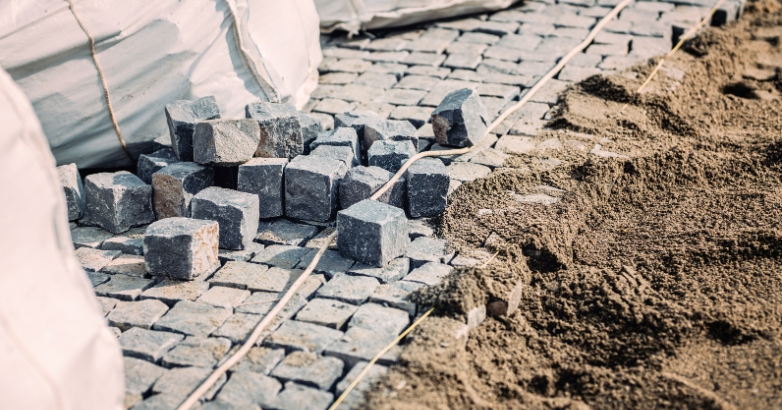
Once the gravel base is in place, spread a 1–2 inch layer of bedding material—either coarse sand or stone dust—across the surface. This layer forms a smooth, level bed that allows for precise placement and adjustment of each cobblestone. It also helps distribute weight evenly across the apron, minimizing pressure on individual stones. Use a rake to level the bedding material carefully, maintaining consistent elevation and preventing future unevenness. This is the ideal stage to make minor adjustments before setting the stones.
Lay Out the Cobblestones in the Chosen Pattern
With the foundation complete, skilled installers hand-lay the cobblestones according to the chosen design, creating a durable and visually striking driveway cobblestone apron. Whether using a straight layout, herringbone, running bond, or fan pattern, they begin at one edge and work methodically across the surface, placing each stone with precision to maintain consistent spacing and alignment. Installers also vary color and size deliberately to achieve a balanced, cohesive appearance. When the design includes a border (soldier course), they install those stones first to frame the apron neatly and enhance its structural integrity.
Adjust and Level Each Cobblestone
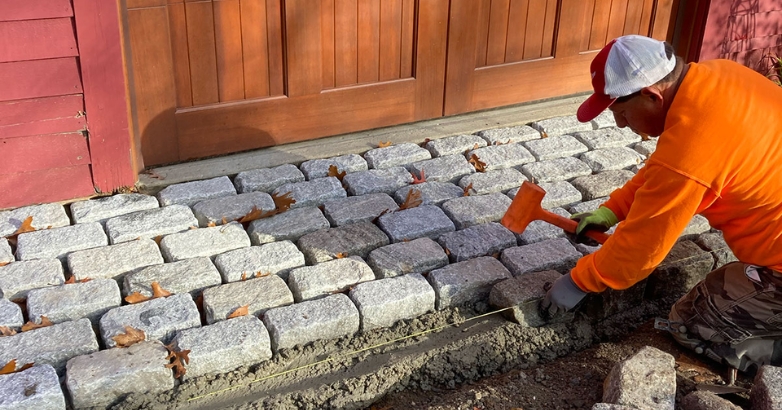
Precision leveling is critical at this stage. Each cobblestone is tapped into place with a rubber mallet and adjusted to achieve a flat, even surface that matches the surrounding grade. Installers constantly check levels using straightedges and spirit levels to ensure the apron remains uniform with proper slope for drainage. Stones may be slightly repositioned or have bedding material added or removed beneath them as needed. Taking the time to level each stone properly ensures a professional finish that is both attractive and structurally sound.
Fill Joints with Sand or Mortar
After placing the cobblestones, installers fill the joints with either sand or a wet mortar mix, depending on the design and desired finish. They sweep sand into the gaps and use a plate compactor to vibrate it down, locking the stones in place while preserving slight flexibility. For a more rigid, long-lasting bond, they apply mortar between the joints. Joint filling not only enhances the apron’s structural strength but also helps prevent weed growth, water infiltration, and stone shifting. A well-filled joint gives the surface a clean, polished appearance.
Compact the Surface
After joint filling, the entire surface of the driveway cobblestone apron is compacted again using a plate compactor with a protective pad. This vibration helps settle the stones into the bedding layer and ensures the joint material fills all gaps completely. Compacting the apron surface also reduces future shifting under vehicle traffic. Care is taken to compact evenly without damaging the cobblestones. This step finalizes the structural bond between all layers — gravel base, bedding layer, cobblestones, and joint material — creating a solid, cohesive driveway entrance.
Install Edging or Border Stones
Edging stones, often laid in a vertical (soldier) pattern, are installed along the perimeter of the cobblestone apron to provide extra support and protect against spreading or displacement. The edging can either match or contrast with the main cobblestone pattern for added visual appeal. Secure installation of edging stones reinforces the apron’s shape, prevents erosion at the edges, and adds a polished, professional finish. Properly anchored edging helps maintain the apron’s clean lines and overall stability for decades.
Clean and Inspect the Finished Apron
The final step is thoroughly cleaning the cobblestone surface to remove excess sand, dust, and debris. A careful inspection ensures all stones are properly set, joints are filled, edges are secure, and the surface is even. Minor adjustments are made if necessary to perfect the look. A final rinse with water can enhance the natural color of the stones and remove any construction residue. Once approved, the apron is ready for immediate use, offering a beautiful, functional enhancement to your driveway.
Ready to Transform Your Driveway?
Trust the experts at Elite Landscapes & Concrete to craft a stunning, long-lasting driveway cobblestone apron for your home or business. Contact us today for a free consultation and bring timeless curb appeal to your property!
Read More: Stamped Concrete vs Pavers – Pros, Cons & Best Use Cases
Driveway Cobblestone Apron Cost Breakdown
Understanding the costs involved in installing a driveway cobblestone apron helps you plan and make informed choices. Here’s a breakdown of typical expenses, from material selection to labor and smart budgeting strategies.
Material Costs
The price of materials for a driveway cobblestone apron varies based on the specific type of stone selected. Granite cobblestones or Belgian blocks usually range from $10 to $20 per square foot, while reclaimed cobblestones may cost $20 to $30 per square foot due to their uniqueness.
Concrete pavers are more budget-friendly, typically priced between $7 and $15 per square foot, making them an attractive option for larger projects.
Labor/Installation Fees
Professional installation is essential for long-lasting results. Labor fees for a cobblestone driveway apron in Connecticut usually range from $25 to $40 per square foot, which covers site preparation, base installation, and expert stone setting. More intricate patterns or borders can increase labor costs.
At Elite Landscapes & Concrete, you’re investing in craftsmanship, attention to detail, and lasting quality that ensures your apron driveway cobblestone stands the test of time.
Budget Tips
To maximize your investment, consider selecting a straightforward design and local materials to reduce transportation costs. Opting for concrete pavers can help keep your project affordable without sacrificing durability.
Also, carefully plan the size of your driveway. Sometimes a smaller, expertly crafted apron has the most visual impact for less. Requesting a detailed estimate from Elite Landscapes & Concrete ensures transparency and helps you stay within budget.
Read More: Backyard Patio Ideas – 10 Solutions for Your Connecticut Home
Driveway Cobblestone Apron Maintenance & Longevity
A well-installed driveway cobblestone apron is built to last for generations, but a little care goes a long way. Here are simple maintenance steps to protect your investment and keep your apron looking its best.
Cleaning
Regular cleaning keeps your cobblestone driveway apron free of dirt, leaves, and debris. A broom or leaf blower is often enough, while occasional rinsing with a garden hose removes surface grime. Avoid harsh chemicals to protect the stone’s natural finish.
Repairs
If individual cobblestones become loose or damaged, repairs are straightforward. The affected stone can be lifted and replaced without disturbing the rest of the apron. Filling joints with fresh sand or mortar will help prevent shifting and maintain a smooth, even surface.
Seasonal Care
During winter, use non-corrosive de-icing products and avoid metal shovels to prevent scratches. Inspect the apron after snow or heavy rains, replenishing joint sand as needed to prevent weed growth and erosion. Proper seasonal care ensures your driveway retains its beauty and durability year after year.
Frequently Asked Questions about Driveway Cobblestone Apron
Granite and Belgian blocks are top choices, prized for their strength, timeless look, and ability to withstand severe weather conditions. For a more budget-friendly option, concrete pavers also offer excellent durability and performance.
Costs vary based on size, materials, and installation complexity. On average, expect to invest more than a traditional concrete apron, but the long-term value and minimal maintenance justify the initial cost.
The apron is the portion of your driveway that links directly to the street, offering critical structural support, safeguarding the edges from damage, and boosting overall curb appeal.
While a cobblestone driveway apron typically carries a higher initial cost compared to concrete, its exceptional durability, minimal maintenance needs, and timeless visual appeal make it a more cost-effective investment in the long run.
A properly installed cobblestone driveway apron can endure for 75 to 100 years or longer with minimal upkeep, far outlasting most other driveway materials.
Conclusion
A driveway cobblestone apron is more than a beautiful entryway—it’s a wise investment in your property’s durability, value, and curb appeal. Throughout this article, we explored what a cobblestone driveway apron is, the types of materials available, and their many benefits, from impressive longevity to easy maintenance.
We also covered design options, the expert installation process, cost considerations, and essential maintenance tips. If you want an entrance that stands the test of time and instantly enhances your home, trust Elite Landscapes & Concrete. Our skilled team delivers exceptional craftsmanship on every project.
Ready to elevate your property? Contact Elite Landscapes & Concrete today for a free consultation!