
Paver Patio vs Concrete Patio – Which is Better?
Choosing a paver patio vs concrete patio isn’t just about what looks good today—it’s about what will still look good (and hold up) years from now. Concrete often wins on upfront price and speed, while pavers tend to win on long-term durability, design options, and repair flexibility. If you’re weighing a lower initial cost against fewer future headaches, the comparison below will make the trade-offs clear.
Which Is Better: Pavers or Concrete?
Concrete is generally the more budget-friendly option upfront. It’s poured as a solid slab, installs quickly, and works well for simple, clean designs. However, concrete can crack over time due to soil movement, settling, or freeze-thaw cycles, and repairs are often visible.
Pavers cost more initially, but they’re built from interlocking stones set on a compacted base. This system allows for natural movement, making them more resistant to cracking. They also offer more colors, patterns, and easier long-term repairs—since individual pavers can be replaced without redoing the entire patio.
| Feature | Paver Patio | Concrete Patio |
| Installed cost per sq ft | Higher | Lower |
| Lifespan | 30–50+ years | 20–30 years |
| Maintenance level | Moderate | Low–Moderate |
| Repairability | Replace single pavers | Patch cracks/slab |
| Climate performance | Better overall | More crack-prone |
| Design flexibility | High | Medium |
Next, we’ll break down appearance, durability, climate performance, cost, and maintenance to help you choose the right patio for your home.
Appearance and Visual Appeal
When comparing a paver patio vs concrete patio, appearance is often the deciding factor for homeowners who care about curb appeal.
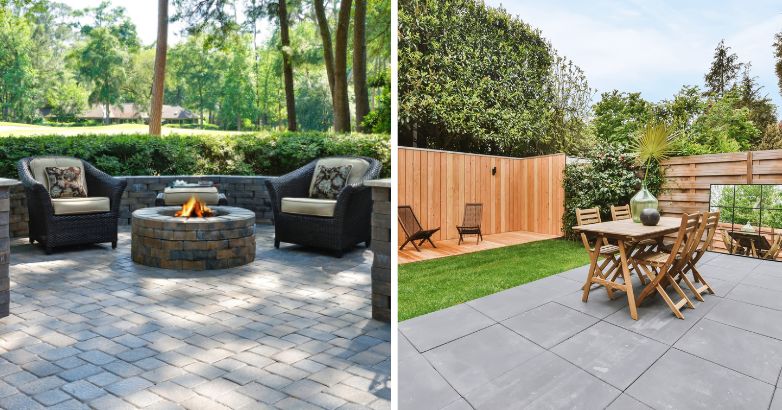
Pavers offer natural variation in color, shape, and texture. Because they’re individual units, they create depth and dimension that feels more custom and high-end. You can choose from brick, stone-look, or modern geometric styles to match your home’s architecture.
Concrete, by contrast, creates a clean, uniform slab. While stamped or stained concrete can add texture and color, it still maintains a more continuous surface appearance.
If you want a patio that becomes a design feature, pavers offer more flexibility. If you prefer a simple, streamlined look, concrete delivers a minimalist finish that pairs well with modern or budget-focused projects.
Read More: Natural Stone Pavers Vs Concrete Pavers – Full Comparison
Durability and Long-Term Performance

When evaluating a concrete vs paver patio, durability often becomes the deciding factor.
Pavers are installed as an interlocking system over a compacted base. This design allows the surface to flex slightly with ground movement, reducing the risk of major damage. If shifting occurs, affected pavers can be lifted and reset.
Concrete is poured as a solid slab. While strong under compression, it’s less forgiving when soil expands, contracts, or settles. Over time, this can lead to cracking. Once cracks appear, repairs are usually visible and may spread.
In terms of lifespan, paver patios commonly last 30–50+ years, while concrete patios typically last 20–30 years, depending on installation quality and climate conditions.
Performance in Climate & Soil Conditions

Climate plays a major role in how a paver patio vs concrete patio performs over time.
In freeze-thaw climates, concrete is more prone to cracking as moisture seeps in, freezes, and expands. Pavers handle these cycles better because their joints allow for slight movement and natural drainage, reducing pressure buildup.
In hot climates, concrete can expand and develop surface cracks, while darker pavers may retain more heat but remain structurally stable. In high-moisture areas, proper base preparation is critical for both—but pavers typically drain more effectively through sand-filled joints.
For homes built on shifting or clay-heavy soil, pavers often outperform concrete since the interlocking system adapts to ground movement instead of fracturing like a rigid slab.
Read More: Choosing the Right Stone for a Pool Deck – What to Know
Cost Breakdown and Long-Term Investment
When comparing a paver patio vs concrete patio, upfront cost is only part of the equation. Long-term performance, maintenance, and repair flexibility all affect the true investment over time.
Installation Cost Comparison
Concrete patios usually cost less per square foot because they’re poured and finished as one continuous surface. Paver patios cost more due to individual units, pattern layout, edging, and joint sand. However, pavers often deliver higher perceived value and a more custom appearance.
Labor and Base Preparation Differences
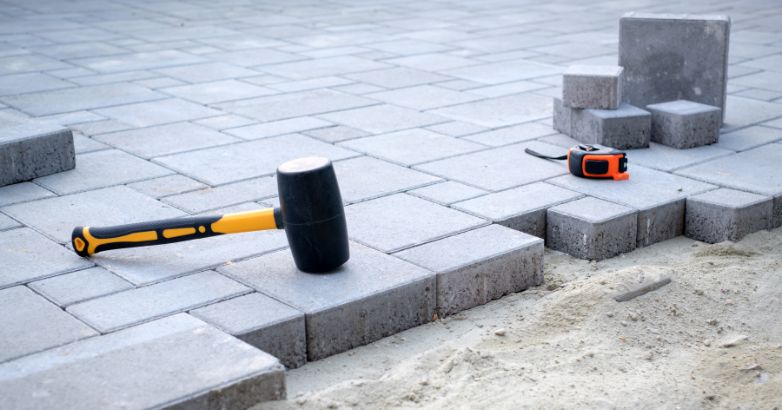
Concrete requires formwork, reinforcement (when used), pouring, and finishing, typically over a simpler base. Pavers demand more intensive preparation: excavation, multiple layers of compacted gravel, bedding sand, edge restraints, and careful placement for long-term stability.
Maintenance and Repair Costs Over Time
Concrete maintenance may include sealing, cleaning, and crack repair—repairs that often remain visible. If cracking spreads, sections or the entire slab may need replacement. Pavers may require joint sand refresh and occasional re-leveling, but damaged areas can be repaired individually.
20-Year Cost Projection Example
Over 20 years, a lower-cost concrete patio may require crack repair, resurfacing, or partial replacement, increasing total expense. A paver patio starts at a higher price but often avoids major structural repairs, helping narrow the long-term cost difference.
Read More: Stone Patio Ideas – 15 Designs to Elevate Your Yard
Installation Process and Timeline
Understanding the installation process helps clarify the differences in a paver patio vs concrete patio, especially when considering project length and when you can start using your new space.
Overview of Concrete Installation Steps
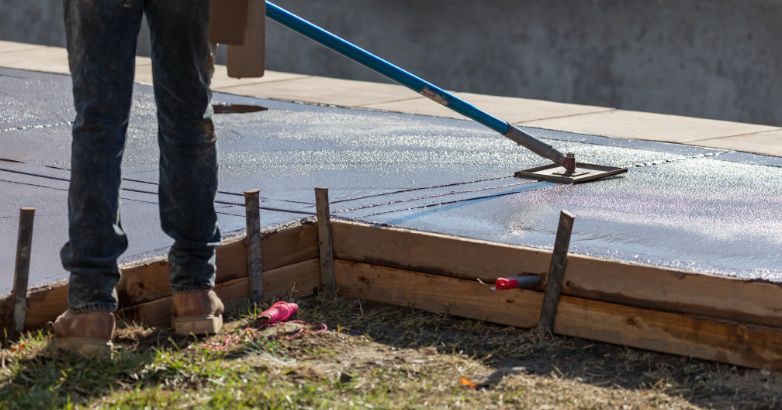
Concrete installation begins with excavation and base preparation, followed by forming the patio shape. Concrete is then poured, leveled, and finished. After curing—typically several days—the surface may be sealed for added protection and longevity.
Overview of Paver Installation Steps
Paver installation requires excavation, installation of a compacted gravel base, bedding sand, and edge restraints. Pavers are then laid individually in the chosen pattern, compacted into place, and finished with joint sand for interlocking stability and drainage.
Timeline and Usability Differences
Concrete is usually faster to install but requires curing time before full use. Paver installation may take slightly longer due to base preparation and individual placement, but once compacted and finished, the patio is typically ready for immediate use.
DIY vs Professional Considerations
While small concrete pours or paver projects can be DIY-friendly, proper grading, compaction, and drainage are critical for longevity. Professional installation reduces the risk of cracking, settling, or drainage issues that can become costly over time.
Maintenance and Repair
Maintenance is another major factor when comparing a paver patio vs concrete patio, especially if you’re thinking long term.
Sealing and Upkeep Requirements
Concrete patios often benefit from sealing every few years to protect against moisture, stains, and surface wear. Pavers may also be sealed to enhance color and reduce weed growth, but sealing is optional and typically easier to maintain over time.
Crack Repair vs Individual Paver Replacement
Concrete commonly develops cracks from settling or freeze-thaw cycles. Repairs usually involve patching or resurfacing, which can remain visible. With pavers, damaged or stained sections can be removed and replaced individually without disturbing the surrounding area.
Long-Term Appearance and Repair Flexibility
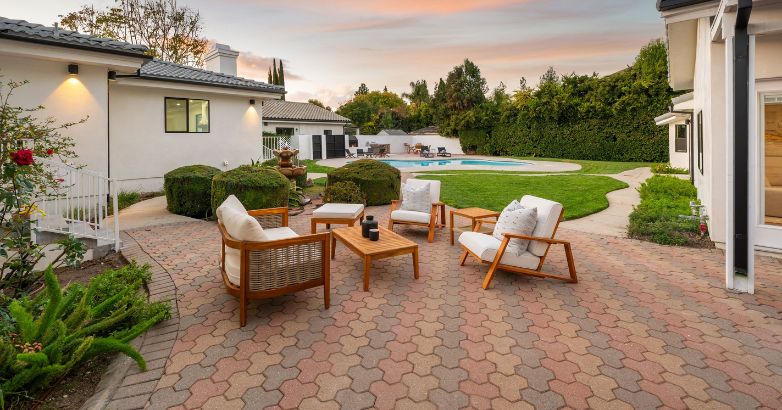
Over time, concrete may show discoloration, surface scaling, or widening cracks. Pavers tend to maintain a more consistent look since individual units can be reset or replaced. This flexibility makes it easier to preserve a clean, attractive appearance for decades.
Read More: Front Walkway Ideas – 10 Expert Picks for Connecticut Homes
When to Choose Pavers
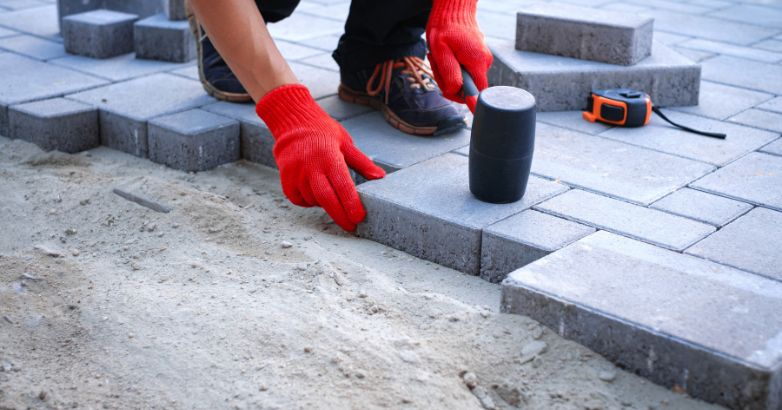
Pavers are often the better choice when long-term value, durability, and design flexibility matter most.
Long-Term Homeowners
If you plan to stay in your home for many years, a paver patio can provide better long-term return. Their extended lifespan and repair flexibility help reduce major replacement costs, making them a smart investment for homeowners thinking ahead.
Design-Focused Buyers
Pavers offer a wide range of colors, textures, shapes, and laying patterns. If curb appeal and customization are priorities, pavers allow you to create a patio that complements your home’s architecture and enhances overall outdoor aesthetics.
Areas with Freeze-Thaw or Shifting Soil
In regions with freeze-thaw cycles or clay-heavy soil, pavers often outperform concrete. The interlocking system allows natural movement, reducing the likelihood of large cracks and making adjustments easier if settling occurs.
When to Choose Concrete
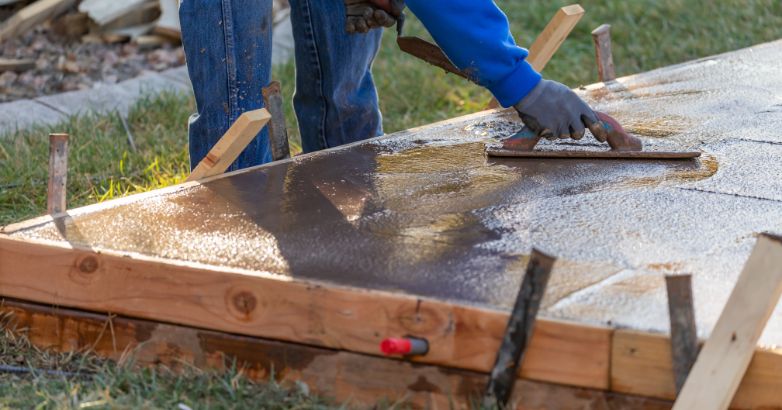
Concrete can be the right choice when simplicity, speed, and upfront affordability are the top priorities.
Budget-Focused Projects
If keeping initial costs low is your primary concern, concrete is often the more economical option. Its lower material and labor costs make it attractive for homeowners working within a strict budget or upgrading outdoor space affordably.
Simpler Aesthetic Preference
Concrete provides a clean, uniform look that pairs well with modern or minimalist homes. While stamped or stained finishes are available, standard concrete works well for homeowners who prefer a straightforward, low-profile design.
Faster Installation Priority
Concrete patios are typically quicker to install than pavers. Once poured and finished, the only delay is curing time. If you need a patio completed quickly for an upcoming event or seasonal use, concrete may be the faster solution.
Read More: Backyard Patio Ideas – 10 Solutions for Your Connecticut Home
Frequently Asked Questions
Below are answers to the most common questions homeowners ask when comparing a paver patio vs concrete patio, so you can make a confident, informed decision.
Yes, in most cases a paver patio costs more upfront than concrete. Materials, base preparation, and labor increase the initial price. However, pavers may reduce long-term repair costs, which can narrow the overall investment difference over time.
Paver patios typically last 30–50 years or more with proper installation and maintenance. Concrete patios generally last 20–30 years. Lifespan depends heavily on climate, soil conditions, and the quality of base preparation.
While not immediate, most concrete patios eventually develop some cracking due to settling, soil movement, or freeze-thaw cycles. Proper installation and control joints help minimize cracking, but it’s difficult to prevent entirely over decades.
Pavers require occasional joint sand replenishment and may benefit from sealing, but repairs are usually simple. Concrete requires less routine upkeep, yet crack repairs can be more noticeable and sometimes more expensive to fix.
In some cases, yes. If the existing concrete slab is structurally sound and properly graded for drainage, pavers can be installed over it. However, surface damage or drainage issues may require removal before installation.
Conclusion
When comparing a paver patio vs concrete patio, the decision comes down to priorities.
If your main goal is lower upfront cost and faster installation, concrete is a practical and budget-friendly option. It delivers a clean, simple look and works well for straightforward projects.
If you’re focused on long-term durability, design flexibility, and easier repairs, pavers often provide greater value over time. Their interlocking system handles soil movement better, and individual pieces can be replaced without redoing the entire patio.
Both materials can create a beautiful outdoor space when installed correctly. The best choice depends on your budget, style preferences, and how long you plan to stay in your home.
If you’re still unsure which option fits your property best, the team at Elite Landscapes & Concrete can help. Contact us today for a consultation and personalized estimate to design the right patio for your home.