
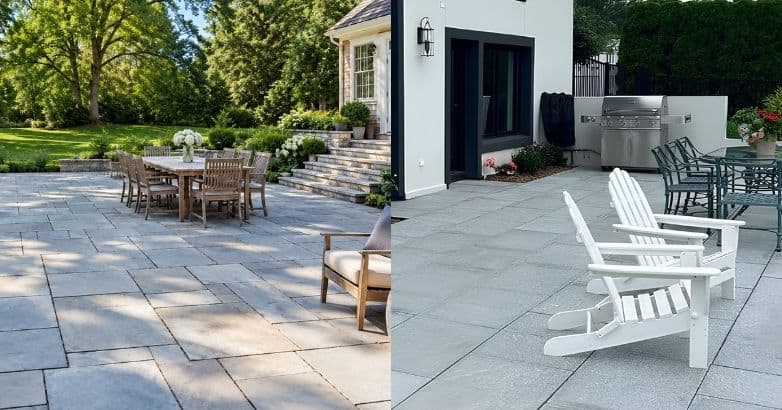
Bluestone VS Granite for Patios – Choosing the Right Stone
When comparing bluestone vs. granite for patios in CT, both are durable natural stones that can complement Connecticut homes. Bluestone is often preferred for its classic blue-gray appearance and natural variation, while granite provides exceptional strength, stain resistance, and long-term durability. The best choice depends on your budget, design preferences, patio location, and desired level of maintenance.
Bluestone vs. Granite: Quick Comparison
| Factor | Bluestone | Granite | Winner |
| Durability | Durable, but lower-quality stone may flake along natural layers | Harder and more resistant to wear, cracking, and flaking | Granite |
| Cost | Typically $25–$45 per sq. ft. installed in CT | Typically $20–$32 per sq. ft. installed in CT | Granite |
| Maintenance | More susceptible to staining and surface flaking | Lower water absorption and generally easier to maintain | Granite |
| Appearance | Classic blue-gray stone with natural Northeastern character | More colors and a structured, speckled appearance | Bluestone for traditional CT style |
| Heat and Slip Resistance | Dark colors get hot; textured finishes improve traction | Performance also depends on color and surface finish | Tie: color and finish matter most |
| Connecticut Winter Performance | Performs well with quality stone, drainage, and installation | Superior resistance to moisture and freeze-thaw cycles | Granite |
Overall winner: Granite. It offers greater durability, easier maintenance, strong winter performance, and often a lower installed price in Connecticut. Choose bluestone when its classic New England appearance is the higher priority.
What Is the Difference Between Bluestone and Granite?
The main difference when comparing Bluestone VS Granite for Patios is their composition. Bluestone is typically a dense sandstone with natural color variation, while granite is a harder igneous stone formed from interlocking mineral crystals. These differences affect each material’s appearance, durability, maintenance needs, and price.
What Is Bluestone?

Bluestone is a natural stone commonly quarried in Pennsylvania and New York. It is known for its blue-gray coloring, although individual pieces may also contain green, brown, rust, and lilac tones. Its layered formation creates a natural, organic appearance that works especially well with traditional New England homes and landscapes.
Bluestone patio pavers are available in irregular shapes or dimensional patterns. Common surface options include natural cleft, which preserves the stone’s varied texture, and thermal finishes, which create a more consistent surface.
Read More: Bluestone Vs Flagstone For Patios In Connecticut – Which Is Best?
What Is Granite?
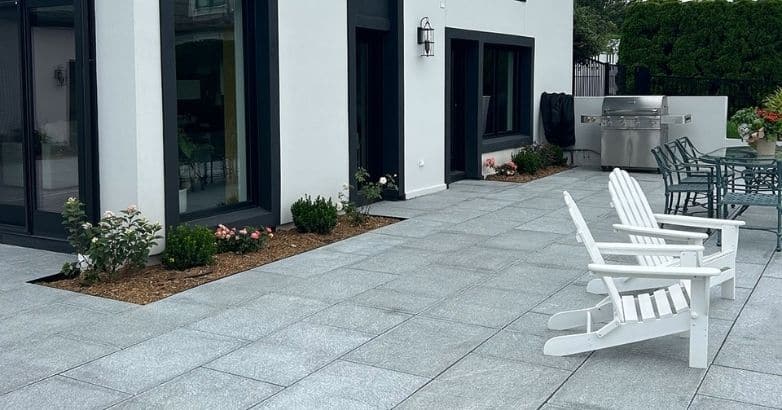
Granite is an igneous rock composed primarily of minerals such as quartz and feldspar. Its dense, crystalline structure makes it exceptionally hard and resistant to wear. Granite is available in numerous colors, ranging from light gray and beige to charcoal, pink, and black.
For patios, granite may be cut into uniform pavers or used in irregular pieces. Thermal or flamed finishes are frequently selected for outdoor applications because they add texture and improve traction.
Why Stone Finish and Quality Matter
Stone type alone does not determine how a patio will perform. The grade, thickness, finish, and consistency of the material can affect its durability, comfort, traction, and appearance.
A textured finish can provide better grip in wet conditions, while darker stones may absorb more heat in direct sunlight. High-quality, properly selected stone is also less likely to develop premature flaking or other surface issues. For Connecticut patios, the stone and installation system must be suited to repeated freezing and thawing.
Bluestone vs. Granite Durability in Connecticut
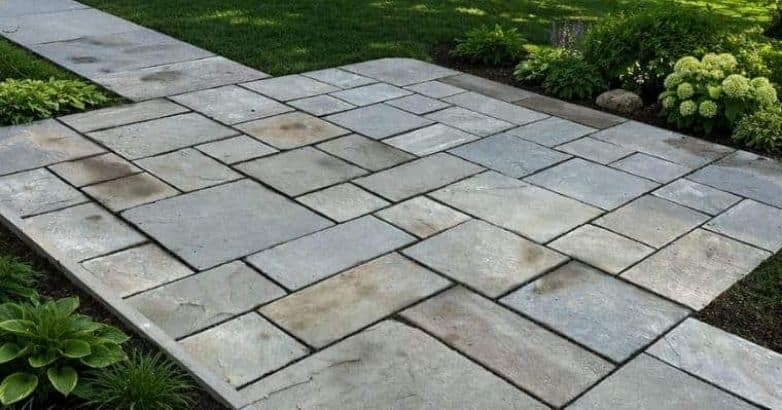
When comparing Bluestone VS Granite for Patios in Connecticut, both materials can create long-lasting outdoor spaces. Granite generally offers greater hardness and resistance to weathering, while bluestone’s performance varies more depending on the stone’s quality, density, and installation.
Freeze-Thaw Performance
Granite’s dense structure and low water absorption make it highly resistant to Connecticut’s repeated freezing and thawing cycles. Because less moisture penetrates the stone, there is less risk of internal damage when temperatures fall below freezing.
Quality bluestone can also perform well through Connecticut winters. However, more porous or layered pieces may absorb moisture, which can contribute to surface damage as the water freezes and expands. Proper drainage, grading, and base preparation are essential for either material.
Resistance to Cracking and Flaking
Granite is harder and generally less prone to cracking, chipping, or surface flaking. However, even granite can crack if the patio base settles, drainage is inadequate, or the stone is installed incorrectly.
Bluestone naturally contains layers and variations that give it character. Lower-quality pieces may flake or separate along these layers over time, particularly after repeated exposure to moisture and freezing temperatures. Choosing dense, high-quality stone reduces this risk.
Expected Longevity
Both materials can last for several decades when properly installed and maintained. Granite typically offers the longer service life because of its exceptional hardness and weather resistance. Bluestone can also remain attractive and functional for generations, although occasional joint repairs, cleaning, or replacement of individual pieces may be needed.
Ultimately, excavation, base compaction, drainage, stone quality, and installation technique influence patio longevity just as much as the material itself.
Bluestone vs. Granite Cost in CT
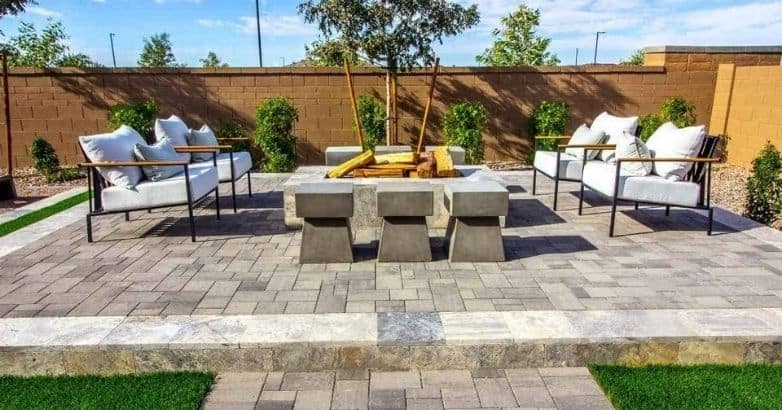
When comparing Bluestone VS Granite for Patios, the total cost depends on more than the price of the stone itself. Material quality, site preparation, installation method, and design complexity all contribute to the final estimate.
Material and Installation Costs
In Connecticut, bluestone patios typically cost about $25 to $45 per square foot installed, while granite pavers generally cost about $20 to $32 per square foot installed. These are planning ranges rather than fixed prices, and each project requires an individual estimate. Learn more about stone patio costs in Connecticut.
Bluestone can require additional labor when pieces vary in thickness or must be fitted into an irregular pattern. Granite pricing varies according to the stone’s color, thickness, finish, dimensions, and source.
Factors That Affect Patio Pricing
The primary factors influencing the cost of a bluestone or granite patio include:
- Patio size and layout
- Stone grade, thickness, and finish
- Dimensional versus irregular patterns
- Excavation and removal of existing materials
- Grading, drainage, and base preparation
- Property access and equipment limitations
- Curves, borders, steps, walls, and custom cuts
- Labor requirements and material availability
A lower material price does not always result in a less expensive patio. Complex installation conditions or extensive site preparation can have a greater effect on the budget than the stone selection.
Which Material Offers Better Long-Term Value?
Granite often provides excellent long-term value because its hardness and weather resistance can reduce surface deterioration and repair needs. It may be the better choice for homeowners prioritizing maximum durability and low maintenance.
Bluestone also offers lasting value, particularly for homeowners who prefer its natural appearance and connection to traditional Northeastern landscapes. High-quality bluestone can remain functional for decades when installed over a stable, well-drained base.
The better investment ultimately depends on the patio’s design, location, expected use, and the quality of the installation.
Appearance and Design Options
Appearance is an important consideration when comparing Bluestone VS Granite for Patios in Connecticut. Both materials can complement the landscape, but they create noticeably different visual effects. Bluestone offers an organic, regional character, while granite often produces a more structured and refined appearance.
Bluestone Colors, Finishes, and Patterns

This natural stone is best known for its blue-gray color, but Full Color bluestone may also contain green, brown, rust, and lilac tones. Blue Select bluestone provides a more consistent blue-gray appearance for homeowners who prefer a uniform patio.
Common bluestone finishes include:
- Natural cleft: Textured surface with organic variation
- Thermal: More even texture with a clean, finished appearance
- Honed: Smooth, contemporary surface generally better suited to protected areas
Bluestone can be installed in square and rectangular patterns for a tailored look or as irregular flagstone for a more rustic design.
Granite Colors, Finishes, and Patterns
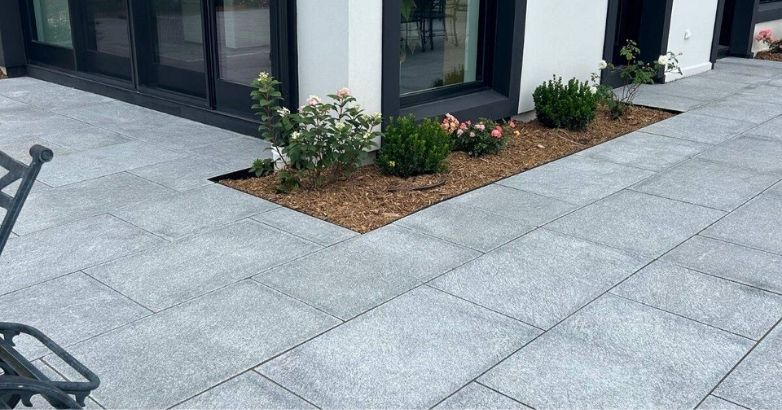
Granite is available in a broad selection of colors, including light gray, silver, beige, charcoal, black, and pink. Its visible mineral grains create a speckled appearance that may be subtle or pronounced depending on the granite variety.
Popular outdoor finishes include:
- Thermal or flamed: Textured for traction and outdoor durability
- Bush-hammered: Rough and evenly textured
- Split-face: Naturally rugged with visible surface variation
Granite pavers can be arranged in running-bond, modular, geometric, or repeating patterns. Granite cobblestones may also be incorporated into borders and accents.
Matching the Stone to Your Home
Bluestone works naturally with traditional, colonial, farmhouse, and New England-inspired homes. Its muted colors also pair well with brick, wood siding, and natural landscape features.
Granite complements both classic and contemporary architecture. Lighter varieties can brighten a patio, while dark granite creates contrast against pale siding or surrounding greenery.
Consider your home’s exterior colors, architectural style, existing masonry, and surrounding landscape before choosing a stone. Viewing samples outdoors in direct sunlight, shade, and wet conditions can reveal how each material will look throughout the day.
Heat and Slip Resistance
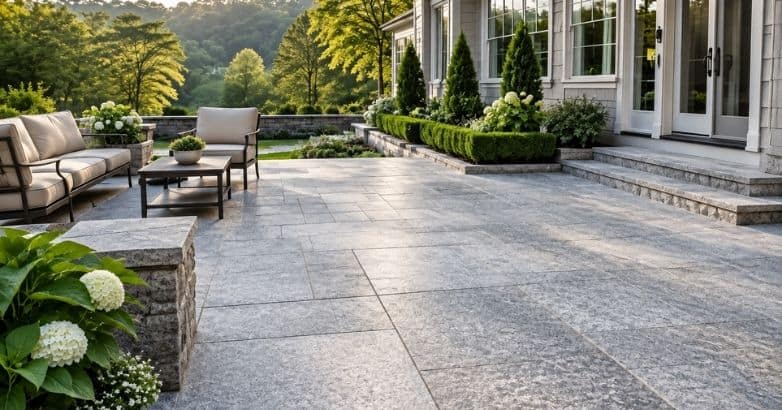
Heat retention and slip resistance are important when comparing Bluestone VS Granite for Patios exposed to full sun or located around a pool. In both cases, the stone’s color and finish often matter more than the material itself.
Does Bluestone or Granite Stay Cooler?
Neither stone is always cooler. Dark bluestone can become noticeably warm in direct sunlight, while light-colored granite generally remains more comfortable underfoot. However, a pale bluestone surface may stay cooler than dark granite.
Stone thickness, surface texture, surrounding shade, and the length of sun exposure also affect how hot a patio becomes.
How Color and Sun Exposure Affect Surface Temperature
Darker stones absorb more solar energy and usually reach higher surface temperatures than lighter stones. Patios with southern or western exposure may become especially warm during summer afternoons.
Shade from trees, pergolas, umbrellas, and nearby structures can improve barefoot comfort. Homeowners planning a pool patio or another frequently used sunny area should compare stone samples outdoors before making a selection.
Which Stone Is Less Slippery When Wet?
Neither bluestone nor granite is automatically slip-resistant. Traction depends primarily on the surface finish.
Natural-cleft and thermal bluestone typically provide better grip than smooth bluestone. Flamed, thermal, bush-hammered, or split granite can also provide strong traction. Polished and highly honed surfaces should generally be avoided in exposed areas that regularly become wet.
No natural stone surface is completely slip-proof, especially when covered by standing water, algae, leaves, or ice.
Best Finishes for Pool Patios
Thermal bluestone and flamed or bush-hammered granite are strong choices for pool patios because their textured surfaces improve traction. Natural-cleft bluestone can also provide grip, although its surface may be less even.
The ideal pool patio should combine:
- A textured, slip-resistant finish
- A lighter color for improved barefoot comfort
- Proper grading and drainage
- Consistent, securely installed stones
- A sealer, if used, designed for outdoor wet areas
Professional material selection and installation can create a pool patio that balances safety, comfort, and appearance.
Maintenance and Stain Resistance

Maintenance is another key factor when comparing Bluestone VS Granite for Patios. Both materials are relatively easy to maintain, but granite’s dense composition generally makes it more resistant to moisture and staining. Regular cleaning and prompt spill removal can preserve either patio’s appearance.
Cleaning Bluestone Patios
Sweep bluestone regularly to remove leaves, soil, and debris. For routine cleaning, rinse the patio with water and use a pH-neutral cleaner formulated for natural stone when necessary.
Oil, grease, food, and organic debris should be removed promptly because bluestone may absorb stains. Avoid acidic cleaners and overly aggressive pressure washing, which can damage the stone’s surface or loosen joint material.
Cleaning Granite Patios
Granite patios can usually be maintained through sweeping and occasional rinsing. A soft brush and pH-neutral stone cleaner can address dirt or residue that water alone does not remove.
Although granite is highly stain-resistant, spills should still be cleaned quickly, especially on lighter-colored or unsealed stone. Leaves and other organic materials should not be allowed to remain on the surface for extended periods because they may leave discoloration.
Does Either Stone Need Sealing?
Neither bluestone nor granite always requires sealing. The decision depends on the stone’s porosity, finish, color, location, and exposure to food, oil, moisture, or pool chemicals.
Bluestone may benefit from a penetrating sealer in stain-prone areas, such as outdoor kitchens and dining patios. Granite frequently needs less protection, although some varieties may still benefit from sealing.
If a sealer is used, it should be breathable, designed for exterior natural stone, and appropriate for wet or freeze-thaw conditions. Products that create a glossy surface should generally be avoided on outdoor patios because they may alter the stone’s appearance and reduce traction.
Which Stone Is Best for Your Patio?
Bluestone is often best for a natural, distinctly Northeastern appearance, while granite is generally better for maximum durability and lower maintenance. The right choice depends on your home, patio use, site conditions, and preferred design.
When to Choose Bluestone

Bluestone may be the better option when you want:
- A classic material associated with New England landscapes
- Natural blue-gray, green, brown, and rust color variation
- A rustic irregular layout or traditional rectangular pattern
- A patio that complements brick, wood, or historic architecture
- An organic transition between the home and surrounding landscape
High-quality bluestone installed over a stable, well-drained base can provide decades of reliable performance in Connecticut.
When to Choose Granite

Granite may be the stronger choice when you prioritize:
- Exceptional hardness and weather resistance
- Minimal surface flaking and moisture absorption
- Reliable performance in high-traffic areas
- A structured, formal, or contemporary appearance
- A broad selection of colors and textured finishes
- Lower long-term maintenance requirements
Granite is especially practical for patios exposed to heavy use, moisture, or repeated freeze-thaw cycles.
When to Combine Bluestone and Granite
Bluestone and granite do not have to be mutually exclusive. Combining them can add contrast, define different areas, and connect a patio with other hardscape elements.
Bluestone may form the main patio surface while granite is used for borders, steps, seat walls, or decorative accents. Granite can also create a durable edge around an irregular bluestone layout.
For a cohesive result, the stones should share complementary colors, appropriate finishes, and compatible thicknesses. Careful planning also ensures that transitions remain level and drainage functions properly.
Bluestone vs. Granite FAQs
To help you evaluate Bluestone VS Granite for Patios, here are answers to common questions Connecticut homeowners ask before choosing a material.
Granite generally offers better resistance to Connecticut’s freeze-thaw cycles because it is dense and absorbs little moisture. High-quality bluestone can also perform well when installed over a properly prepared base with effective drainage.
Not necessarily. In Connecticut, granite pavers often cost about $20 to $32 per square foot installed, while bluestone commonly ranges from $25 to $45 per square foot installed. Stone variety, finish, pattern, site preparation, and installation complexity can change the final price.
Bluestone can get hotter than granite when it has a darker color and receives direct sunlight. However, surface temperature depends more on color and pirates than on stone type alone. A light-colored bluestone may stay cooler than dark granite.
Both stones can work well around a pool when selected with a textured finish. Thermal bluestone and flamed or:// Gate bush-hammered granite provide better traction than polished surfaces. Color, drainage, surface consistency, and exposure to direct sunlight should also guide the decision.
Bluestone can crack or flake, particularly when lower-quality pieces absorb moisture or separate along their natural layers. Dense stone, proper base preparation, adequate drainage, and professional installation reduce the likelihood of these problems.
Yes. Bluestone can be used for the main patio while granite defines borders, steps, walls, or accent areas. Complementary colors, finishes, and compatible stone thicknesses create a cohesive, level design.
Bluestone or Granite: Final Verdict for CT Patios
When comparing bluestone vs. granite for patios in CT, there is no single best choice for every property. Choose bluestone for its natural Northeastern character, rich color variation, and flexible design options. Choose granite for exceptional strength, freeze-thaw resistance, and lower long-term maintenance.
Both materials can provide decades of performance when the stone is high quality and the patio is built with proper excavation, base preparation, grading, and drainage. Your home’s architecture, patio use, budget, and preferred appearance should ultimately guide the decision.
Plan Your Patio With Elite Landscapes & Concrete
Elite Landscapes & Concrete can evaluate your property, explain the differences between available stones, and recommend the right material for your patio. Contact our team today to schedule a consultation and begin planning a durable, professionally installed Connecticut stone patio.